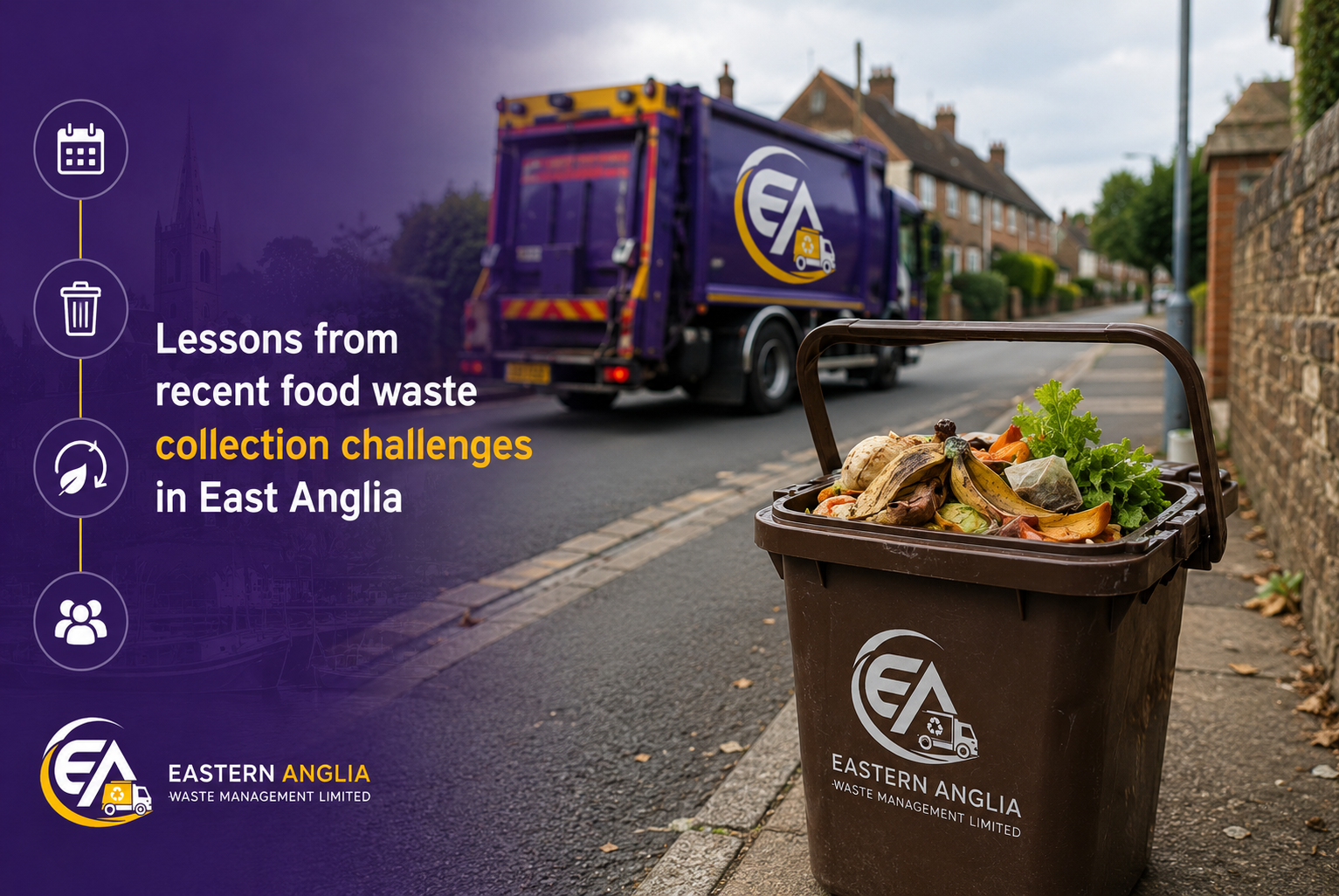
Lessons From Recent Food Waste Collection Challenges in East Anglia
Recent reports from Aldeburgh highlighted the difficulties that can arise when food waste collection services experience disruption. Residents reportedly faced missed collections and delays, resulting in overflowing food waste caddies and growing concerns about hygiene, odours, and the impact on local communities.
While such situations can occur for a variety of reasons—including operational challenges, service transitions, vehicle availability, staffing pressures, or unexpected increases in demand—they serve as an important reminder of the critical role reliable waste collection services play in maintaining clean and healthy neighbourhoods.
Food waste is one of the most time-sensitive waste streams managed by local authorities and waste operators. Unlike dry recyclables or general household waste, food waste can quickly create unpleasant odours, attract pests, and become a source of frustration for residents when collections are delayed. This is especially true during warmer periods when decomposition occurs more rapidly.
The recent challenges reported in Aldeburgh also highlight the importance of clear communication between service providers and customers. When disruptions occur, residents value timely updates, realistic collection schedules, and transparent information about when normal service will resume. Effective communication helps maintain trust and allows households to make temporary arrangements where necessary.
From an industry perspective, the incident reinforces the need for robust operational planning. Waste management providers must continually invest in fleet maintenance, route optimisation, staffing resilience, and contingency measures to minimise the impact of unforeseen disruptions. As food waste recycling schemes continue to expand across the UK, ensuring services can scale effectively will become increasingly important.
The environmental importance of food waste collection should not be overlooked. Proper food waste recycling helps divert organic material away from landfill, reducing greenhouse gas emissions and supporting the production of renewable energy through anaerobic digestion. Consistent collections are therefore not only important for residents but also for achieving wider sustainability goals.
At Eastern Anglia Waste Management, we believe that reliability, responsiveness, and customer communication are the foundations of effective waste management services. Incidents such as those recently reported in Aldeburgh provide valuable lessons for the entire industry and reinforce the importance of delivering dependable waste collection services that communities can rely upon.
As demand for food waste recycling continues to grow, waste operators, local authorities, businesses, and residents all have a role to play in building cleaner, greener, and more resilient communities across East Anglia.